
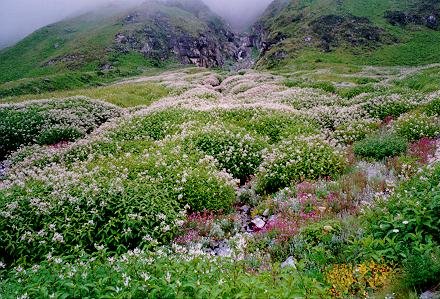
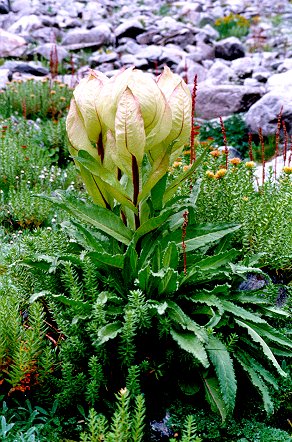


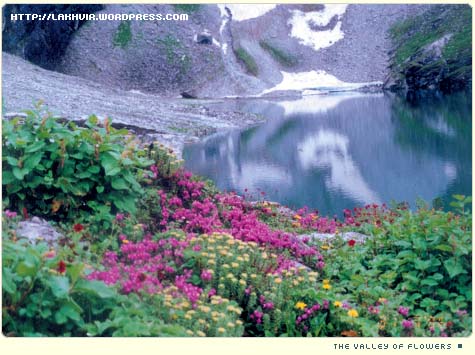


The Valley of Flowers references.
this is where I need to live too :D
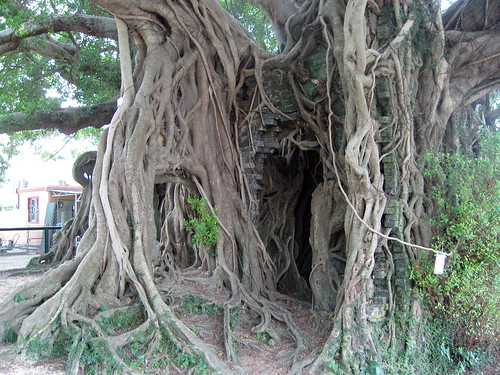
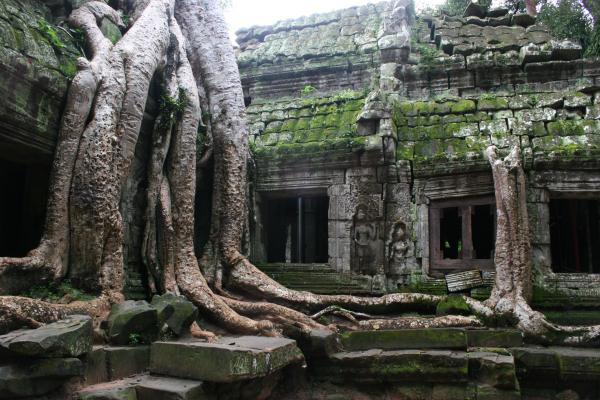
inside a tree, in a valley of flowers.
this research is driving me crazy!! I'm constanly finding new things that are totally awe inspiring.
ZZJANG!
wanderlust is happening. But i will not leave to the himalayas.
instead i will create an ipad app.
WOOHOO
:D
anyway
research about the valley of flowers.
So I was seeing the Flower personification as these keywords-
beauty, abundance, romantics, giggling, flowery (hee)
feminine- bhakti.
been reading about hindu flowers.
So cyoote.
ashok means 'one without grief'
its said to alleviate people from grief..sita cries under it to soothe herself waiting for rama.
parijita falls in love with the sun, is scorned and so becomes a flower that only blooms at nigth because she can't stand the sight of her lover.
sheds her petals like tear drops at sunrise!!
and we all know the significance of the lotus so i'm not even going to get into that!
champas adorn krishna's ears. malati adorn womens braids,
vakul blossoms only when sprinkled by nectar from the mouth of a beautiful woman,
kamadeva, the indian god of desire, uses flowers like champa and chamelis as his arrows to make people fall in love. :D
SO MUCH LOVE!!
another eenteresting local legend about the valley of flowers in the himalayas, is that people
believe it's inhabited by fairies. and that if you wander around, you can get abducted by fairies hiding amongst the flowers.
and and and! remember in the ramayan when lakshman falls ill, hanuman is sent to the himalayas from lanka to get a certain herb to heal him? And hanuman doesnt know what to do so he just picks up the whole mountain?
Same place! its said to have the most amount of medicinal flowers and plants!!
eeeeenteresting indeed.
so I started to imagine the valley of flowers to be a place that's a mixes these myths
with the Lotus Eater myth. Remember that?
A space of oblivion and languor.
of sweet nothings.
the Odyssey IX says
"I was driven thence by foul winds for a space of 9 days upon the sea, but on the tenth day we reached the land of the Lotus-eaters, who live on a food that comes from a kind of flower. Here we landed to take in fresh water, and our crews got their mid-day meal on the shore near the ships. When they had eaten and drunk I sent two of my company to see what manner of men the people of the place might be, and they had a third man under them. They started at once, and went about among the Lotus-Eaters, who did them no hurt, but gave them to eat of the lotus, which was so delicious that those who ate of it left off caring about home, and did not even want to go back and say what had happened to them, but were for staying and munching lotus with the Lotus-eaters without thinking further of their return; nevertheless, though they wept bitterly I forced them back to the ships and made them fast under the benches. Then I told the rest to go on board at once, lest any of them should taste of the lotus and leave off wanting to get home, so they took their places and smote the grey sea with their oars."[1]
So there we go!
the valley of flowers.
a place where maya and talisma
wander into. At first enamoured and overwhelmed by all the beauty. Giggling flower fairies totally in love with them
giving them all the abundance in the world, but so ignored post the taqseem that they don't want these two children to leave.
and they find themselves unable to escape.
Now, for the fairy feefle.
I'm thinking, that I'm a little tired of conventional depictions of fairies.
mainly because it's a little predictable and overdone
also because it's a very victorian depiction. very western over tea and scones types.
so i started thinking...indian fairies.
and pari is a literal translation of angel.
however Parees are also depicted with like lofy white feather wings and all
too victorias secret.
an Apsara is like a nymph and also known to seduce *wiggles eyebrows *
and thats what these flowers in the valley do.
not seduce in a sexual sense though because this is a kids book and I don't want to go to jail.
So i started to look at pictures at apsaras and they are quite beautifully depicted me thinks.


So lovely :)
and i started to think about other such Indian elements that could bring in that feeling.
and came to -
Old indian actresses.
Madhubala

definitely fairy material yo!
except adorned and decked with flowers. :)
YUMMY






 “Children love to relate to the characters within narratives in books; that is what captivates them,” said Shilo Shiv Suleman, an illustrator who is attempting to turn that fascination into an actual immersive experience by creating books that kids can “interact” with. A final-year student of animation from the Srishti School of Art, Design and Technology, the 21-year-old, who has also worked extensively as a freelance artist, will soon publish Khoya, a book which she wrote and designed. Khoya is a traditional fantasy story about a boy and a girl in a dystopian setting in which all the spirits of the natural world have been banished. Where it differs from other children’s books is that Khoya is an experiment in interactive storytelling incorporating a technology called Augmented Reality. “Khoya came about as an attempt to bring together two very distinct, yet similar, narrative experiences – that of animation and that of books,” said Suleman.
 Suleman’s efforts are indicative of trends in the publishing world that expand the ways in which stories are told. Childrens’ books publishers Tulika recently introduced two of their popular titles as downloadable books that can be read on the iPhone and iPad. One of the titles they chose were Who Will Rule? ,by Meena Raghunathan, illustrated by Harsha Nagaraju, which is based loosely on an Australian aboriginal tale about what happens when a group of creatures decides that the largest sect amongst them should rule the world. The second title, Ekki Dokki, is a bilingual tale in Hindi and English written by Sandhya Rao, accompanied by Ranjan De’s illustrations, adapted from a Marathi folktale about two sisters named Ekkesvali and Dhonkesvali who meet an old woman living alone in a clearing in the middle of a forest. With the help of Fliplog, an e-book publishing framework designed and developed by Apptility Software, Tulika developed e-versions of the books with page-by-page audio (the text can be accompanied by audio, with multiple language options) and a feature where readers can record their own voices for dialogues and narration to accompany the story.
 Renu Kaushal Singh, a pre-school teacher, is mother to ten-year-old Pranav, who uses his father’s iPad to read interactive books. She felt that the fact that the book was on a gadget was what got her son interested. Although she sees advantages to the format, especially while travelling, she maintained that she would “still love to read Amar Chitra Katha and Panchatantra for my children, and would push them to read physical books”.


